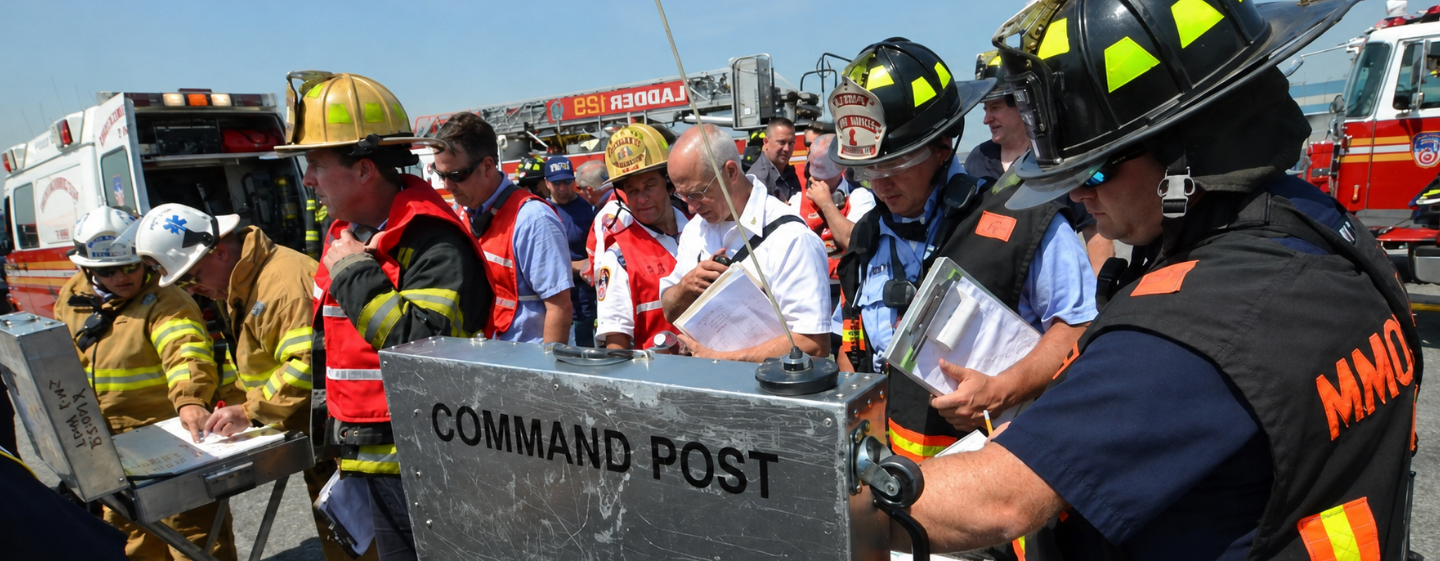
What is the Emergency Services Administration degree?
This bachelor’s degree prepares students for leadership roles in fire services, emergency
management, law enforcement, and public safety organizations. The program focuses
on administration, leadership, policy, and real-world emergency response systems.
Who is this program designed for?
This program is ideal for:
- Current or aspiring professionals in fire service, EMS, law enforcement, or emergency
management
- Students interested in leadership roles in public safety
- Individuals looking to advance into supervisory, management, or administrative positions
What careers can I pursue with this degree?
Graduates are prepared for roles such as:
- Public Safety Chief Officer or Supervisor
- Emergency Management Coordinator
- Public Safety Administrator
- Training Officer
- Government or nonprofit emergency services roles
How long does it take to complete the program?
The program is designed to be completed in 4 semesters (2 years) for full-time students.
How many units is the program?
The program consists of approximately 60 units, with a balanced schedule of 15 units
each semester.
One critical thinking course and one oral communication course from Area A-1B (CalGETC)
must be completed for the program.
Do I have to take a full-time load?
Yes, this program is a cohort-style program and requires you to take all the classes
in the degree plan each semester.
Are there any prerequisites?
- Completion of an accredited Associate Degree in Public Safety or a closely related
field
- Examples of closely related field:
- Fire Technology
- Public Safety
- Administration of Justice
- Law Enforcement
- Emergency Medical Services (EMS)
- Emergency Management
- Other closely related Public Safety Associate Degree or Associate Degree for Transfer
(ADT)
What will I learn in this program?
You will develop skills in:
- Emergency management and incident command systems
- Leadership and organizational management
- Budgeting, human resources, and legal considerations
- Public policy and administration
- Community engagement and public safety strategies
- Real-world simulation and decision-making
Is there a capstone or final project?
Yes. Students complete an Integrated Management Simulation (EMSA 4416) in their final
semester, where they apply what they’ve learned to real-world emergency scenarios.
Can I work while completing this program?
Yes. The program is designed with working professionals in mind.
Are classes offered online or in-person?
The program is completely online, asynchronous to accommodate working professionals.
Do I need prior experience in emergency services?
No prior experience is required, but it is highly beneficial. The program is structured
to support both new students and working professionals.
How is this program different from a fire technology or criminal justice degree?
This degree focuses on administration and leadership across multiple emergency services
sectors, rather than a single discipline. It prepares students for management-level
roles rather than entry-level positions
Will this degree help me promote within my agency?
Yes. Many agencies value or require a bachelor’s degree for promotion into supervisory
or administrative roles. This program is designed to build those competencies.
Are there opportunities for hands-on learning?
This is a fully online program, however, our courses include applied projects, scenario-based
learning, and a capstone simulation that mirrors real-world emergency management situations.
How do I get more information and apply?
Please join our interest list. We will provide information sessions in August and
September with anticipated application period in late September-October 2026 for a
Spring 2027 start.