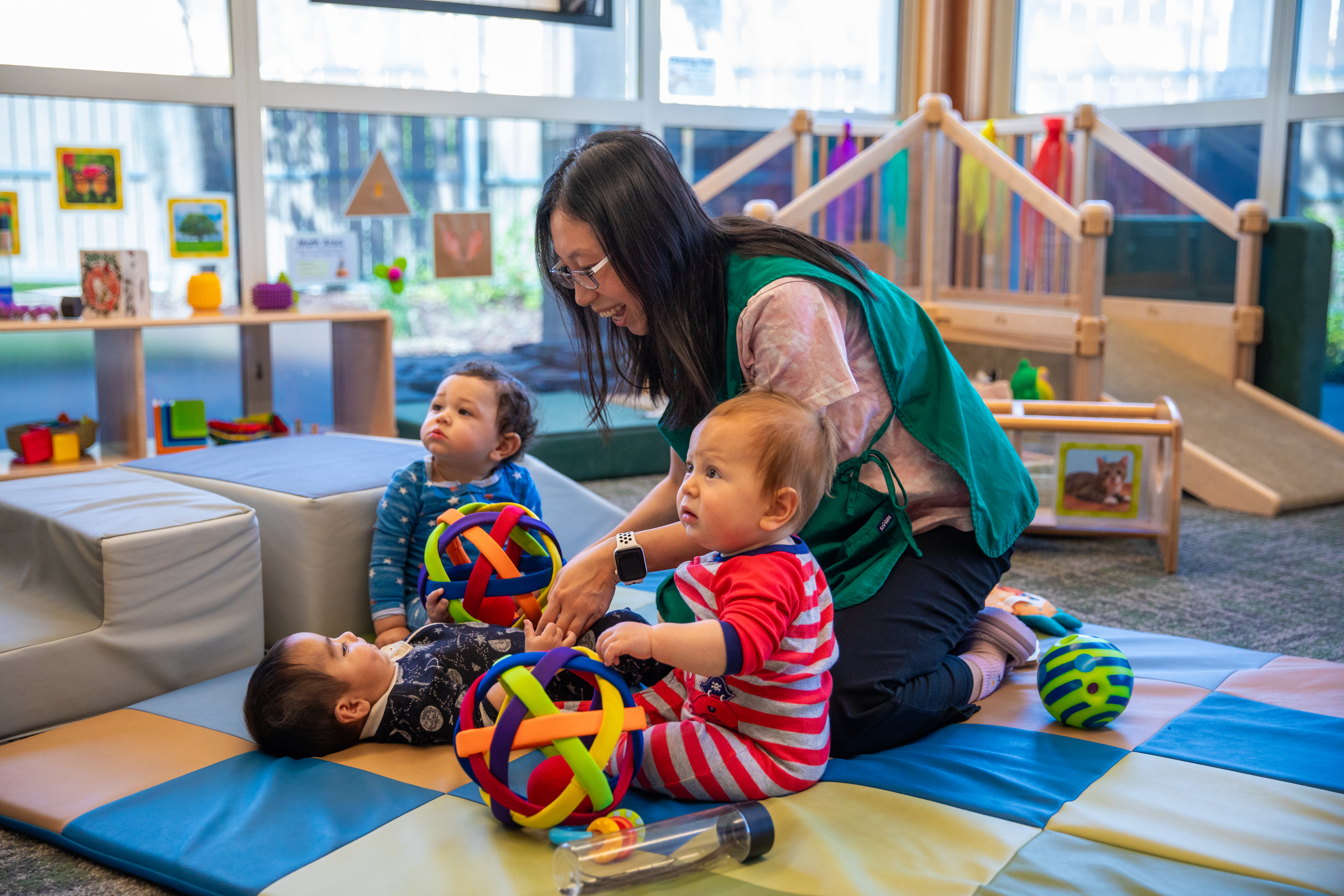
While children play, they put their ideas into action. They learn to communicate effectively.
They discover how to get along with other children. They make things happen and enjoy
a sense of competence. Play allows children to experiment, and problem solve. It fosters
the ability to focus attention and to concentrate for long periods of time.
Play provides opportunities for children to express their thinking and feelings. It
requires authentic learning experiences, fosters imagination, and encourages children
to generate creative ideas. Learning experiences are developmentally appropriate and
are matched with the age of the child, their individual interests, their abilities,
and their temperament.
Workbooks, coloring books, and pre-cut art materials are ready-made adult models for
children that provide little or no opportunity for individuality and creativity. A
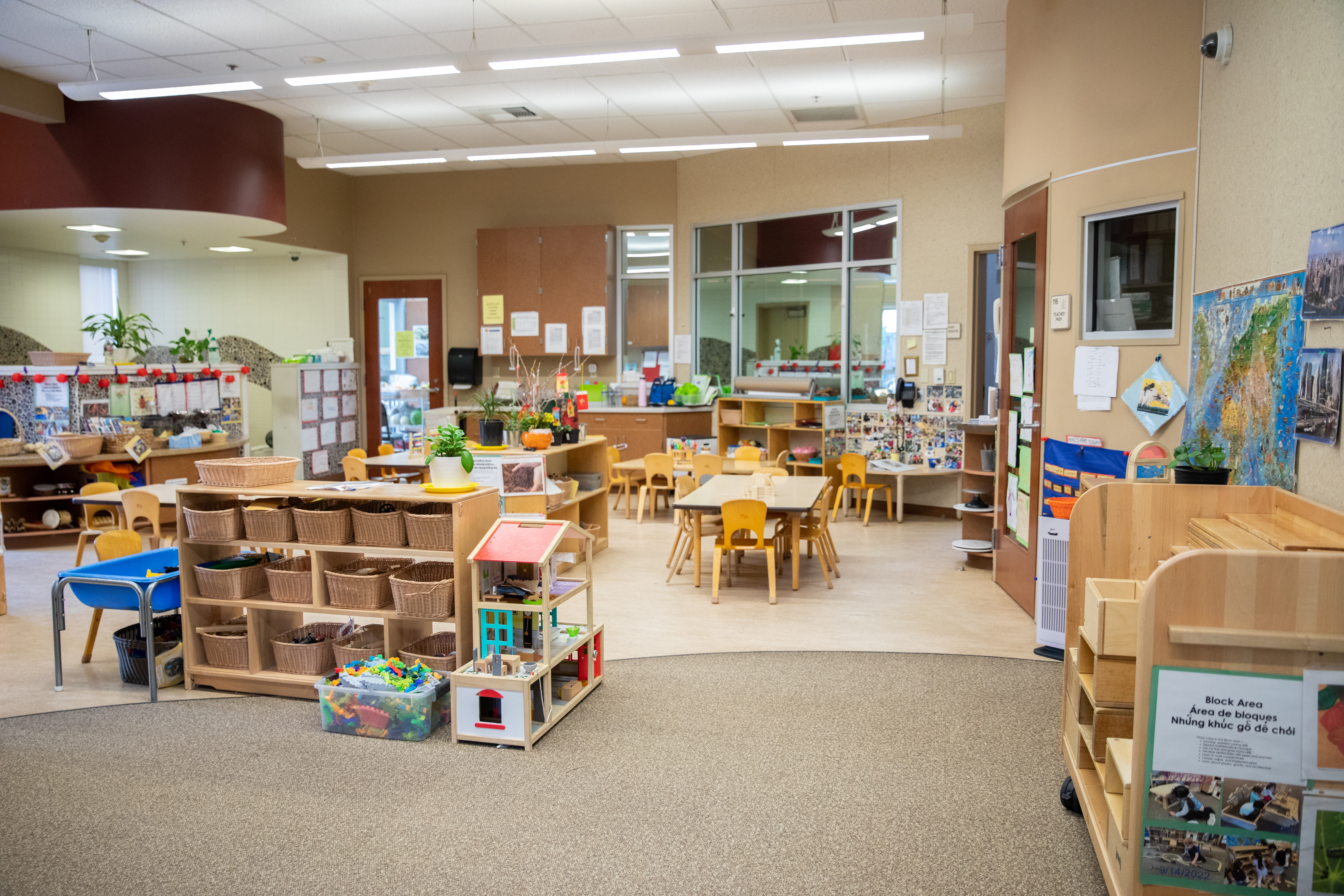
rich array of natural materials and authentic learning experiences enables the child's
involvement in a full range of activities.
Learning experiences are child-directed rather than teacher-directed. Children are
presented with many opportunities for selecting materials, initiating activities themselves,
participating in activities others have chosen, and following through to satisfactory
completion.
Children are given ample opportunity and time to discover, invent, create, feel, taste,
touch, and enjoy a full range of activities within the classroom and college campus.
The curriculum is ethnically diverse, non-sexist, and anti-biased as demonstrated
by use of appropriate learning materials, books, pictures, foods, and how teachers
respond to children’s individual needs.